Page 12 of 12

The Long Arc of Voice: How Authors Reshape Their Prose Across Decades

The Sentence as Biography

When Virginia Woolf wrote her first novel, The Voyage Out, her sentences moved with Victorian propriety, careful and contained. By the time she reached The Waves, those same sentences had become liquid instruments of consciousness, flowing between minds with the fluidity of thought itself. This change shows something fascinating about how writers evolve: their prose becomes a kind of autobiography written in syntax and rhythm, documenting not just what they think, but how their minds have learned to move through language.

The Long Arc of Voice: How Authors Reshape Their Prose Across Decades

Consider how Gabriel García Márquez’s early stories in Eyes of a Blue Dog read like careful exercises in realism, each sentence constructed with the precision of a watchmaker. The magical elements feel almost apologetic, slipped in through careful description. But by One Hundred Years of Solitude, his prose had developed an entirely different relationship with the impossible. His sentences had learned to carry miracles as casually as they carried weather reports, creating that distinctive voice where the extraordinary becomes mundane through sheer syntactic confidence.

This change isn’t simply about growing skill. It’s about discovering the particular way language wants to work for each individual consciousness. Early in their careers, many writers basically impersonate the kind of writer they think they should be. Their sentences often bear the ghostly imprints of their influences, sometimes beautifully, sometimes awkwardly. But as years pass, something more personal begins to emerge in the rhythm and structure of their prose.

Illustration for The Long Arc of Voice: How Authors Reshape Their Prose Across Decades

The Archaeology of Influence

Reading through an author’s work chronologically shows layers of literary DNA. In Zadie Smith’s White Teeth, you can trace the enthusiastic maximalism of Dickens, the social observation of Forster, and the contemporary energy of Don DeLillo all competing for space within her sentences. The prose practically vibrates with competing influences, creating a kind of beautiful chaos that matches the novel’s themes of cultural collision.

But watch what happens by the time Smith writes On Beauty. The sentences have settled into something more distinctly hers. The Dickensian enthusiasm remains, but it’s been tempered by a more mature understanding of when to let silence do the work. Her dialogue has developed a specific ear for the way educated people talk around difficult subjects, and her descriptive passages have found their own particular balance between precision and impressionism.

This process of influence absorption and change never stops. Even established writers continue to evolve, sometimes dramatically. Late Philip Roth sounds nothing like early Philip Roth. The young author of Goodbye, Columbus wrote with careful social observation and controlled irony. The Roth of the American Trilogy had developed a prose style that could sustain vast historical meditations while maintaining the intimacy of confession. His sentences had grown longer, more complex, capable of holding multiple contradictions at once.

Technical Metamorphosis

The most interesting aspect of stylistic growth often lies in the technical details. Joan Didion’s early journalism shows her learning to construct what would become her signature move: the devastating final sentence that recontextualizes everything that came before. In her early pieces, these moments feel more calculated, more obviously constructed. By The White Album, they arise with such seeming naturalness that readers experience them as inevitable revelations rather than writerly effects.

Similarly, watching Toni Morrison’s prose develop shows a writer learning to trust increasingly complex sentence structures. The Bluest Eye has passages of stunning beauty, but they exist within relatively conventional narrative frameworks. By Beloved, Morrison has developed the confidence to let her sentences fragment and reform in ways that mirror trauma itself. Her prose has learned to embody its subject matter at the level of syntax.

These technical developments often reflect deeper changes in how writers understand their relationship to readers. Early work frequently shows authors working hard to be clear, to make sure readers follow their thinking. More mature work often shows writers who have learned to trust both their own instincts and their readers’ intelligence. The prose becomes more elliptical, more confident in leaving certain things unsaid.

James Salter provides a perfect example of this growth. His early novel The Hunters reads like competent military fiction, clearly written but without particular distinction. But somewhere in the decades between that book and Light Years, Salter developed one of the most distinctive prose styles in American literature. His sentences learned to capture the texture of memory itself, the way important moments feel both vivid and elusive at the same time.

The Long View

Perhaps the most remarkable changes happen when writers live long enough to complete multiple stylistic cycles. Late work often shows authors circling back to earlier preoccupations but with entirely different technical resources. Saul Bellow’s final novel, Ravelstein, returns to some of the intellectual concerns of Dangling Man, but the prose has acquired six decades of additional complexity and compression.

Sometimes this growth moves toward simplicity rather than complexity. Alice Munro’s late stories demonstrate an almost supernatural clarity, as if decades of writing short fiction had taught her to identify and eliminate every unnecessary element. Her sentences in Dear Life carry enormous emotional weight while appearing almost transparent, like perfectly clear water that shows great depths.

The most profound stylistic changes often reflect shifts in how writers understand the relationship between language and experience. Young writers frequently treat words as tools for capturing reality. Mature writers often develop a more complex understanding of how language actually creates the reality it claims to describe. This shift typically produces prose that is both more humble about what writing can accomplish and more ambitious in what it attempts.

Reading authors across the full arc of their careers shows writing not as a fixed skill but as a form of thinking that continues to change as long as the writer remains curious about what sentences can do. The most rewarding literary discoveries often come from following these long stylistic journeys, watching how individual voices develop their own particular ways of moving through language and time.

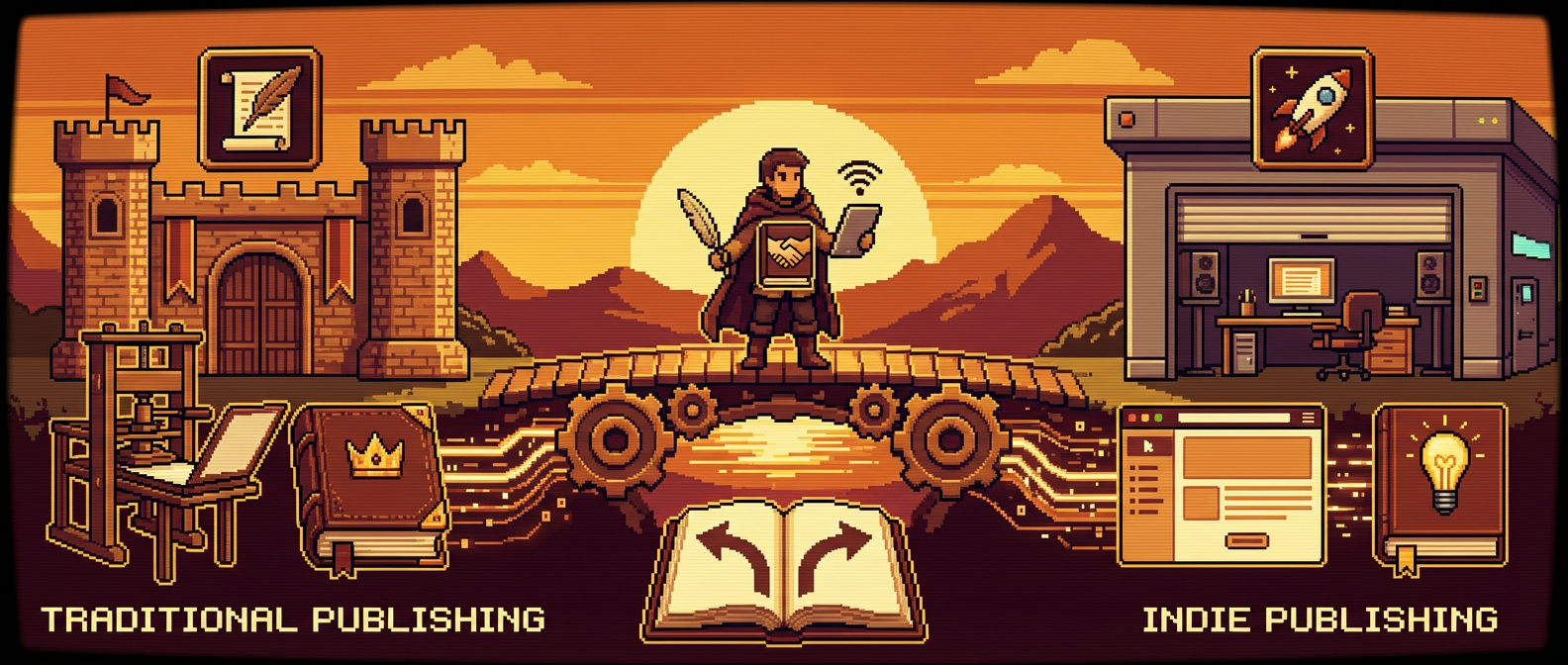
The Hybrid Author Promise: Why the Best of Both Worlds Often Delivers Neither

The Seductive Appeal of Having It All

The hybrid author model promises the literary equivalent of having your cake and eating it too. Picture this: your literary novel graces bookstore shelves through a prestigious traditional publisher while your genre series generates steady income through self-publishing platforms. You get the marketing muscle of established houses for print distribution while keeping creative control over digital releases. The vision is compelling, almost intoxicating in how complete it seems.

The Hybrid Author Promise: Why the Best of Both Worlds Often Delivers Neither

But after watching hundreds of authors try this dual-track approach over the past decade, I’ve noticed a troubling pattern. The hybrid model works for a select few, but it often creates more problems than solutions for most people who attempt it. That promise of diversified income streams and expanded readership? It crashes into some harsh realities: split attention, conflicting brand identities, and the exhausting work of mastering two completely different publishing systems.

Success stories like Mark Dawson, who built a self-publishing empire while maintaining traditional contracts, or Lindsay Buroker, who moves between indie releases and traditional deals, get all the attention. But here’s the thing about these outliers: they have exceptional business skills, established audiences, and often whole teams supporting their efforts. Their wins, while impressive, don’t necessarily translate to the average author juggling a day job with writing dreams.

Illustration for The Hybrid Author Promise: Why the Best of Both Worlds Often Delivers Neither

The Divided Attention Dilemma

Traditional publishing wants one type of professional relationship, while self-publishing requires entrepreneurial skills that many authors lack or find draining. Traditional authors work with editors, marketing departments, and sales teams who handle the business side. Self-published authors? They become marketers, cover designers, formatters, and advertising strategists while still trying to produce quality content.

The hybrid approach asks authors to excel at both modes at once. This split focus often means neither path gets proper attention. Traditional publishers notice when authors seem distracted by their indie projects, which can hurt advance offers and marketing support. Meanwhile, self-published titles suffer when authors can’t dedicate enough time to the constant promotion and audience engagement that indie success demands.

The Publishers Marketplace deal tracker shows that while agents increasingly accept clients with self-publishing experience, the biggest deals still go to authors who show complete commitment to their traditional projects. Publishers invest in authors they see as fully invested in the partnership, not those hedging their bets across multiple platforms.

And the learning curve for each publishing model? Still steep and constantly changing. Amazon’s algorithm changes can kill indie sales overnight. Traditional publishing’s slow decision-making can leave time-sensitive opportunities unused. Authors trying to stay current with both systems often find themselves perpetually behind in each one.

The Brand Identity Crisis

Successful authors build recognizable brands that readers can trust and follow. The hybrid model, though, often splits this brand development across different platforms, genres, and publishing approaches. Readers who discover an author through their traditionally published literary fiction may feel disconnected from that same author’s self-published urban fantasy series, even when the writing quality stays consistent.

This fragmentation goes beyond genre to basic questions of author positioning. Traditional publishers market authors as serious literary voices or established genre authorities. Self-publishing success often depends on prolific output, frequent reader interaction, and quick responses to market trends. These approaches can seem contradictory, leaving authors struggling to maintain authentic voices across platforms.

The rise of platforms like Royal Road and Wattpad as testing grounds for traditional acquisition makes brand management even trickier. Authors must navigate reader expectations shaped by free, frequently updated content while positioning themselves for traditional contracts that value scarcity and prestige. The clash between these different value systems can leave authors unsure about their own creative priorities.

And then there are backlist rights that increasingly return to authors after contract terms expire. This creates new complications rather than clear opportunities. Authors must decide whether to republish these titles independently, seek new traditional homes, or let them fade away. Each choice carries branding implications that affect their entire publishing strategy.

The Economics of Divided Loyalties

The financial realities of hybrid publishing often disappoint authors expecting diversified income to provide stability. Traditional publishing advances get split across multiple books and extended timelines, while self-publishing income requires consistent promotion and new releases to maintain momentum. Authors frequently discover they’re running two separate businesses with different cash flow patterns, tax implications, and professional expenses.

Sure, success stories of BookBub Featured Deals generating massive single-day sales grab attention, but these opportunities remain highly competitive and unpredictable. Authors can’t build sustainable business models around occasional promotional windfalls, yet many hybrid authors find themselves chasing these lightning-strike moments while neglecting the steady relationship-building that both traditional and independent publishing actually require.

The administrative burden alone can overwhelm authors unprepared for managing multiple publisher relationships, independent contractor agreements, and the complex accounting required for accurate royalty tracking across platforms. Kristine Kathryn Rusch business of writing extensively documents how these business complexities can consume creative energy that might otherwise produce better books or stronger reader relationships.

Plus, the investment required to excel in self-publishing keeps growing as the market becomes more sophisticated. Professional editing, cover design, marketing, and advertising costs can quickly exceed traditional publishing advances, leaving hybrid authors financially worse off than their single-track counterparts who can focus their limited resources more strategically.

Finding Clarity in the Chaos

The hybrid model works best when authors approach it strategically rather than opportunistically. Authors who thrive in this space typically start with clear goals for each publishing track and maintain strict boundaries between their traditional and independent projects. They understand that being hybrid means making deliberate choices about where to invest time and energy, not trying to grab every possible opportunity.

The most successful hybrid careers often grow organically from authors who master one approach thoroughly before expanding into the other. This foundation provides both the professional skills and financial stability needed to experiment with new models without compromising existing relationships or income streams.

Most importantly, successful hybrid authors stay honest about their own strengths, limitations, and creative priorities. They recognize that the hybrid model serves specific professional goals rather than being inherently superior to other publishing approaches. The best of both worlds is still achievable, but only for authors willing to work twice as hard for results that may not justify the extra effort.

What has your experience been with authors who pursue multiple publishing paths? Have you seen the challenges and successes that shape these complex career decisions? The conversation around hybrid publishing keeps evolving as more authors experiment with these models and share their honest assessments of what works and what doesn’t.

The Hybrid Author Promise: Why the Publishing World’s Most Flexible Career Path Isn’t What It Seems

The Seductive Appeal of Having It All

The hybrid author model looks like the perfect publishing strategy: keep the prestige and distribution power of traditional publishing while grabbing the higher royalty rates and creative control of self-publishing. Authors like Mark Dawson have built million-dollar businesses mixing traditional print releases with independently published digital content, while Lindsay Buroker shows how fantasy writers can use both paths to reach different readers. The promise is intoxicating. Why choose one publishing route when you can master both?

The Hybrid Author Promise: Why the Publishing World's Most Flexible Career Path Isn't What It Seems
The Hybrid Author Promise: Why the Publishing World’s Most Flexible Career Path Isn’t What It Seems

This dual-path approach has become legitimate as literary agents increasingly welcome clients with established self-publishing track records. They recognize that proven sales figures often matter more than submission letters. Contract negotiations now frequently include term limits that return backlist rights to authors, creating opportunities for smart republishing decisions. The Publishers Marketplace deal tracker regularly shows hybrid authors moving between traditional and indie releases, suggesting a publishing world where flexibility rules.

But beneath this appealing surface lies a messier reality. The hybrid model demands expertise across two completely different business approaches. Each requires distinct skill sets, marketing strategies, and professional relationships. What looks like the best of both worlds often becomes a juggling act that few authors manage well.

The Operational Reality of Dual Publishing Streams

Running a hybrid publishing career is like managing two separate businesses that happen to share the same creative output. Traditional publishing operates on eighteen-month lead times, committee decision-making, and established distribution channels. Independent publishing rewards rapid iteration, direct reader engagement, and quick marketing pivots. Authors quickly learn that strategies that work in one realm can actually hurt progress in the other.

Consider the promotional headache: platforms like BookBub can generate over ten thousand sales in a single day for eligible authors. But these promotional opportunities usually require pricing flexibility that traditional publishers hate. Building an email list through reader magnets is essential for indie publishing, but it may conflict with exclusive content clauses in traditional contracts. Authors constantly navigate competing priorities and contractual restrictions.

The administrative burden multiplies like crazy. Hybrid authors must maintain relationships with editors, agents, and publishing house marketing teams while simultaneously managing cover designers, formatters, and advertising campaigns for their independent releases. They track royalty statements from multiple sources, manage different release schedules, and often discover that success in one area creates time constraints that limit growth in the other.

The Audience Fragmentation Challenge

Here’s what most people miss about hybrid publishing: audience development and reader expectations get incredibly complicated. Different publishing paths attract different reader behaviors and preferences. Traditional publishing readers often discover books through bookstore browsing, professional reviews, and established marketing channels. Indie publishing audiences typically engage through online communities, social media, and genre-specific platforms.

This fragmentation creates unexpected challenges in building a coherent author brand. Serialization platforms like Royal Road and Wattpad work as testing grounds where traditional publishers scout for new talent. But the episodic, interactive nature of these platforms creates reader expectations that don’t translate well to traditional publishing formats. Authors who successfully build audiences on these platforms often struggle to convert that engagement into traditional book sales.

The pricing psychology differs dramatically between publishing paths. Indie readers expect frequent sales, bundled promotions, and direct author interaction. Traditional publishing audiences accept higher price points but expect professional packaging and established quality markers. Authors trying to serve both audiences simultaneously often find themselves diluting their message or confusing their core readership.

The feedback loops operate on completely different timescales. Independent publishing provides immediate sales data and reader response, enabling rapid course correction. Traditional publishing offers delayed feedback filtered through multiple intermediaries. Authors used to indie publishing’s rapid iteration cycles frequently struggle with traditional publishing’s measured pace and limited direct reader access.

The Hidden Costs of Publishing Flexibility

The financial realities of hybrid publishing rarely match the projected benefits. Sure, successful hybrid authors show impressive revenue figures. But these numbers often mask the increased costs of operating dual publishing streams. Professional editing, cover design, and marketing expenses multiply across both paths, while the time investment required to maintain competency in both areas reduces overall productivity.

Tax implications become significantly more complex when authors manage multiple income streams with different payment schedules and international royalty structures. Legal considerations multiply as authors navigate different contract types, rights management, and competing exclusivity clauses. The Kristine Kathryn Rusch business of writing resources highlight how these business complexities can overwhelm authors unprepared for the administrative demands.

Career advancement opportunities may actually decrease under the hybrid model. Traditional publishers often prefer authors who can dedicate full attention to their releases. The indie publishing community sometimes views hybrid authors as less committed to independent publishing principles. Rather than gaining access to the best of both worlds, hybrid authors may find themselves on the margins of both communities.

Redefining Success in a Complex Publishing Landscape

The disappointment with the hybrid author model doesn’t come from its failure to deliver promised benefits. It comes from the gap between expectation and the practical demands of execution. The model works exceptionally well for a small subset of authors who possess both the business skills to manage complex operations and the creative productivity to feed multiple publishing pipelines simultaneously.

For most authors, the hybrid approach is a transitional strategy rather than a permanent career model. Some discover their strengths align better with traditional publishing’s collaborative approach. Others find greater satisfaction in independent publishing’s entrepreneurial demands. The value lies not in maintaining both paths indefinitely, but in using hybrid experiences to make informed decisions about long-term publishing strategies.

The publishing world keeps changing, creating new opportunities and challenges for authors willing to experiment with different approaches. What matters most is honest assessment of personal strengths, available resources, and career objectives rather than pursuing publishing strategies based solely on their theoretical advantages.

Have you considered the hybrid author model for your own publishing journey, or do you lean toward committing fully to one publishing path? The complexities I’ve explored here are worth discussing with fellow authors navigating similar decisions.

The Novel’s New Archaeology: Excavating Literary Fiction in a Transformed Landscape

The Algorithmic Shift in Literary Discovery

The way we find books to read has changed completely. Think of it like layers of civilization built on top of each other, where you can still see traces of the old systems underneath the new ones. Social media platforms now drive more than a fifth of fiction purchases across major publishing houses, which is pretty wild when you think about it. This isn’t just about marketing anymore. Publishers are literally weighing how well a book might perform on TikTok alongside whether it’s actually good.

The Novel's New Archaeology: Excavating Literary Fiction in a Transformed Landscape
The Novel’s New Archaeology: Excavating Literary Fiction in a Transformed Landscape

Digital book communities aren’t just a generational thing, though that’s part of it. These platforms work like sophisticated recommendation engines that completely bypass the traditional gatekeepers. Sure, critics sometimes dismiss this as superficial, but the data tells a different story. These communities engage with literature in ways that actually mirror historical literary salons and reading circles. The main difference? Speed and scale.

Publishers are caught in an interesting bind. They need to balance literary ambition with digital discoverability, which sounds impossible but isn’t always. The most successful literary works today have what I’d call “platform fluency” without dumbing themselves down. This might not be a decline in literary standards so much as an expansion of what it takes to make cultural impact in 2024.

Economic Pressures and the Consolidation of Risk

Publishing house consolidation has made everyone more cautious about debut literary fiction. Advance payments are shrinking because executives want to put their money on sure bets. This economic reality means literary merit has to play nicely with commercial viability, whether we like it or not. Weirdly, this dual requirement might actually be producing more sophisticated popular fiction rather than killing off quality.

The old model of nurturing literary careers over multiple books? That’s mostly gone. Now each novel has to justify itself economically, which affects everything from financial arrangements to how editors work with authors. The Publishers Weekly industry news shows how these structural changes ripple through everything, from how agents strategize to how independent bookstores decide what to order.

Meanwhile, genre fiction authors who go the self-publishing route often make more money than their traditionally published counterparts. This creates a weird tension: literary prestige versus actually being able to pay rent. More and more authors are building hybrid careers that blend traditional publishing credibility with direct-to-reader revenue streams. It’s messy, but it might be the new normal.

Physical and Digital Space Wars

The retail landscape keeps changing dramatically. Barnes and Noble is actually expanding with thirty new locations under Elliott Management, which suggests renewed confidence in physical book retail. This is happening while publishers and libraries are having increasingly heated disputes over digital lending policies. These conflicts have gotten worse since 2020 and raise serious questions about public access to literature.

Literary fiction gets hit particularly hard by these spatial dynamics. Physical bookstores are where readers stumble onto unexpected literary works while browsing. But library restrictions on e-book lending hurt literary fiction readers who depend on library systems. It’s not just competition for attention anymore, it’s competition for basic availability.

How these conflicts get resolved will probably determine whether literary fiction stays accessible to everyone or becomes increasingly divided by who can afford what. Independent bookstores remain important intermediaries, curating literary fiction for local communities while figuring out how to work with digital-first discovery patterns among younger readers.

Prize Culture and the Homogenization Question

Literary prize culture is taking heat for potentially creating a homogenized aesthetic that favors certain narrative styles and themes. This criticism deserves careful attention because it touches on fundamental questions about how literary value gets determined and passed down. The concern isn’t that prize-winning works are bad, but that the prize system might be accidentally narrowing what kinds of literary expression we consider important.

Prize committees operate within cultural moments that inevitably reflect contemporary concerns and blind spots. The tricky part is figuring out the difference between necessary evolution in literary taste and potentially limiting consensus around what counts as important fiction. Looking back, literary canons have always undergone revision. Previously overlooked works gain recognition while others fade.

The Literary Hub book culture discussions around prize culture reveal deeper anxieties about cultural authority when information is democratized. Rather than eliminating prizes, maybe the solution involves diversifying prize-giving institutions and expanding recognition beyond traditional categories. Multiple pathways for literary works to achieve cultural significance.

Archaeological Optimism and Future Excavation

Right now, literary fiction feels like an archaeological dig where multiple historical periods exist at the same time. Traditional publishing structures coexist with algorithmic discovery mechanisms. Physical retail expansion happens alongside digital access battles. Prize culture evolves under pressure from democratized criticism. This complexity doesn’t indicate decline so much as a literary ecosystem adapting to serve diverse reading communities with different needs and preferences.

The most promising literary works emerging today demonstrate fluency across these multiple systems without sacrificing artistic integrity. These novels succeed not by nostalgically recreating past forms but by understanding how contemporary conditions create new possibilities for literary expression. The challenge for readers, critics, and publishers is developing archaeological patience: the ability to excavate value from unfamiliar structures while keeping our critical faculties sharp.

What comes out of this examination isn’t a crisis in literary fiction but a transformation that requires new frameworks for evaluation and appreciation. The novel form has survived previous technological and cultural disruptions by adapting its methods while preserving its essential capacity to illuminate human experience through sustained narrative attention. If you’re interested in participating in this ongoing evolution, you might start by examining your own reading practices. Consider how digital and physical discovery methods shape your literary encounters, and stay curious about works that resist easy categorization within current cultural conversations.

The Newsletter Renaissance: How Writers Are Reclaiming Literary Independence

The Direct Line Revolution

When algorithms decide which voices reach readers and social media platforms disappear overnight, writers are rediscovering something beautifully simple: the email address. The humble newsletter, once stuck in corporate marketing departments, has become the main path to literary independence. Writers who used to court editors and publishers now speak directly to thousands of subscribers, building real careers one email at a time.

The Substack platform alone has more than 35 million active readers across 17,000 publications that charge subscription fees. This isn’t just a tech shift. It’s changing how literary culture actually works. Writers don’t need to convince gatekeepers anymore. They need to convince readers, one newsletter at a time, that their voice deserves space in an already packed inbox.

The writers making real money from this understand that newsletters require their own discipline. You have to stay intimate while showing expertise. Be timely but also timeless. Sound authoritative but remain accessible. These aren’t marketing problems, they’re literary ones. Writers are developing entirely new skills for an ancient craft.

The Economics of Attention

The money potential here goes way beyond what traditional publishing offers new writers. Top newsletter authors now earn seven figures annually from subscriptions alone. That beats advances most established novelists can expect. Traditional literary economics just got flipped upside down. Writers don’t need to spend decades building reputations before seeing real money.

But those impressive numbers hide a messier reality about staying sustainable. The average monthly subscriber churn runs between five and eight percent. Writers must constantly find new readers just to keep their current audience stable. For every hundred subscribers you gain, expect to lose five to eight each month. It creates weird pressure: serve your existing community while continuously expanding your reach.

The conversion math is brutal too. Good writers typically convert three to seven percent of free readers into paying subscribers. Building a thousand-subscriber paid list means attracting fourteen to thirty-three thousand regular readers first. These numbers reveal the newsletter economy for what it really is: a volume business pretending to be an intimate medium. Success requires both literary chops and serious entrepreneurial hustle.

Platform Dependencies and Their Discontents

Newsletter platforms promise liberation from old gatekeepers while creating new dependencies. Writers building audiences on any single platform remain vulnerable to policy changes, technical meltdowns, and competitive moves completely outside their control. The “direct reader relationship” still gets mediated by someone else’s platform.

Competition between platforms is starting to help writers though. The Ghost publishing platform offers better revenue splits and self-hosting options for writers worried about platform dependency. This competition drives better features and financial terms, letting writers optimize based on their specific needs and growth plans.

Email list ownership has become the best protection against algorithmic chaos. Unlike social media followers or website traffic, email subscribers mean direct reader access that no platform can revoke or algorithmically throttle. Writers increasingly see their subscriber lists as their most valuable professional asset, more important than book deals or prestigious bylines. This reflects a deeper truth: sustainable literary careers need owned media, not rented attention.

The Craft of Newsletter Writing

Newsletter writing requires a weird mix of journalistic speed and literary staying power. The best writers understand that each issue must earn its spot in someone’s inbox while building toward something bigger over time. The constraints are fascinating: be topical without being purely reactive, personal without oversharing, authoritative without being academic.

Publishing weekly or bi-weekly creates a completely different relationship with ideas than books or magazine pieces ever could. Writers develop thoughts in public, build arguments across multiple issues, maintain story threads while leaving room for spontaneous exploration. The form rewards consistency over perfection, development over neat conclusions.

Successful newsletter writers develop editorial personalities that go beyond their expertise. Readers subscribe for information and insight, yes, but also for a particular way of seeing and expressing ideas. This puts enormous pressure on voice and perspective. You must articulate not just what you think but how you think, not just what you know but how you learn.

Beyond the Platform Wars

The newsletter economy represents more than a new way for writers to make money. It’s transforming how literary culture organizes itself. Writers mastering this medium develop different relationships with their craft, audiences, and professional identities. They become publishers, community builders, and brand managers on top of being writers. Traditional publishing never demanded this kind of creative expansion.

What’s really interesting is how newsletter success translates back to traditional publishing. Writers with big subscriber bases get courted by publishers, agents, and media companies hungry for their audiences. It creates a fascinating flip: instead of building platform following to sell books, writers increasingly publish books to grow their platforms.

I can’t predict the long-term implications, but the current reality is clear. Writers with the persistence to build substantial newsletter audiences gain creative and financial independence that was previously impossible. They control distribution, set their own schedules, and develop direct reader relationships no intermediary can mess with. For writers willing to embrace both the opportunities and constraints of newsletters, this economy offers something increasingly rare in literary life: the possibility of sustainable creative autonomy. The real question for serious writers isn’t whether to engage with this economy, but how to do it while maintaining the literary standards that make the work worth reading.

Genre fiction markets — where the money is for independent authors — An Honest Cross-genre

The evidence tells a specific story when you dig into it. The topic of genre fiction markets and where independent authors are actually making money deserves closer attention than most coverage gives it. The reason isn’t complicated once you know where to look.

What’s worth focusing on isn’t the headline number. When you look at it through a cross-genre lens, romantasy is driving the fastest growth on BookTok in 2024-2025. That comparative read is also more accurate once you examine what the evidence actually shows.

The Criticism: Setting the Terms

Romance accounts for over 25 percent of all fiction sold in the US. That’s not just a data point about where independent authors make money. It’s the structural condition that makes everything else in this analysis make sense. Context like this doesn’t age quickly. The conditions that created it have been building for years, and their convergence makes this moment different from previous ones that looked similar from a distance.

Romantasy is driving the fastest BookTok growth in 2024-2025. Meanwhile, cozy mystery and cozy fantasy are growing as readers seek comfort reads. Look at both together and a pattern emerges that Publishers Weekly genre coverage has been tracking from the inside: these conditions are more durable than they first appear, and the implications reach further than the immediate headlines suggest.

To understand why this matters, compare what was true three years ago to what’s true now. The change isn’t simply quantitative. It’s qualitative. The participants, infrastructure, and incentive structures have all shifted in ways that build on each other rather than cancel out. That compounding effect is what you need to track.

What makes this moment worth examining carefully isn’t novelty but confirmation. The underlying dynamics have been visible for some time. What’s new is that they’ve reached a threshold where ignoring them requires active effort rather than simple inattention. Crossing that threshold is the event, not the underlying movement that produced it.

Dark romance is generating controversy and record sales simultaneously. That’s part of the same picture. These elements don’t exist in separate silos. They’re reinforcing conditions in the same structural shift.

The Genre Cross-Read: The Analysis

Dark romance generating controversy and record sales simultaneously is where the analysis gets more specific. The surface reading is accessible and not wrong, but it misses the mechanism. The mechanism is where the practical insight lives. What’s worth focusing on isn’t the headline number but how LitRPG and progression fantasy are growing from webfiction audiences into mainstream. Understanding that changes what you do with the information.

Consider what LitRPG and progression fantasy moving from webfiction to mainstream represents in context. It’s not a correlation that happened to appear. It’s a downstream consequence of structural factors that have been compounding. Previous readings of similar situations failed because they treated the symptom as the cause. The structural account is less satisfying as a headline but more useful as an analytical tool.

The comparison to prior cycles is instructive precisely because of where it breaks down. Similar-looking conditions resolved differently in previous iterations because the substrate was different. The audiobook market for genre fiction growing 20 percent year-over-year represents a substrate change. The kind that alters how elastic the system is, not just its current value. Recognizing that distinction separates analysis from pattern-matching.

The skeptical counterargument deserves honest engagement: prior moments with similar surface characteristics didn’t produce the outcomes that seemed logical at the time. That history is real. What’s different now is the audiobook market growing 20 percent year-over-year. That’s not a minor variable. It’s the infrastructure condition that previous cycles lacked. Infrastructure changes tend to persist in ways that sentiment-driven changes don’t. Alliance of Independent Authors resources is one source tracking this dimension with the rigor it requires.

There’s also a distributional question that often goes unaddressed in coverage of where independent authors make money: who captures the value created by these shifts, and who absorbs the disruption costs? The aggregate picture can be positive while the distribution is uneven in ways that matter enormously to specific participants. Keeping that distributional lens in view is part of reading the situation clearly rather than simply optimistically.

Implications: What This Means If You Care About Literary vs Genre

The implications of where the money is for independent authors extend beyond the immediate context. Romance accounting for over 25 percent of all fiction sold in the US, combined with the structural conditions described above, creates a situation where adjacent fields, decisions, and communities are affected in ways that aren’t always visible from inside the primary story. The second-order effects are frequently more important than the first-order ones. They’re where careful attention pays the highest returns.

The frame that matters here, and this is where the analysis departs from mainstream coverage, is that cozy mystery and cozy fantasy growing as readers seek comfort reads is a leading indicator rather than a lagging one. The people positioned to respond to what this signals, rather than what it confirms, are the ones who will be less surprised by what follows.

The practical response depends heavily on your position relative to the dynamics at play. For those closest to the core of genre fiction markets, the implications are immediate and operational. For those at greater distance, the implications are strategic. A matter of understanding which adjacent pressures are building and which assumed stabilities are more fragile than they appear.

The practical question isn’t whether to engage with these dynamics but how. The answer depends on context: what role you occupy relative to genre fiction markets and what your actual decision horizon is. But the first step is the same regardless: accurate understanding of what’s actually happening rather than what the most available narrative says is happening.

A few concrete observations are worth separating out from the broader analysis. First: romantasy driving the fastest growth on BookTok in 2024-2025 isn’t a temporary condition. It’s a new baseline. Second: LitRPG and progression fantasy moving from webfiction to mainstream suggests the adjustment period isn’t over. Third, and most important: the organizations and individuals treating the current moment as a new steady state rather than a transition are making a categorization error that will be costly to unwind later.

The Case Against: What the Critics Get Right

Intellectual honesty requires acknowledging the strongest counterarguments, not just the weakest ones. The case against the optimistic reading of where independent authors make money isn’t trivial. There are structural vulnerabilities in the current picture that deserve direct engagement rather than dismissal.

The most serious objection is about sustainability. Cozy mystery and cozy fantasy growing as readers seek comfort reads can be read not as a foundation but as a ceiling. A point beyond which growth becomes self-limiting because of the very dynamics that produced it. If the current state has already incorporated most of the available supply of early-adopting participants, the remaining growth curve may be structurally shallower than the recent trajectory implies.

There’s also the policy and regulatory dimension. Romance accounting for over 25 percent of all fiction sold in the US describes a condition in a relatively permissive environment. Regulatory responses to the scale implied by these numbers aren’t inevitable, but they’re not implausible either. Organizations planning as though the current regulatory environment is permanent are making an assumption that the history of fast-growing sectors doesn’t support.

The rebuttal to these concerns isn’t that they’re wrong. It’s that they’re already partially priced into the current state of the field. The audiobook market growing 20 percent year-over-year reflects an environment where participants are already adapting to constraints rather than operating in an unconstrained space. The adjustment capacity of the ecosystem is higher than a purely top-down view of the risks suggests.

Looking Forward

The trajectory here is clearer than the pace. Making predictions about when specific thresholds will be crossed is genuinely difficult, and anyone claiming precision about timelines should be treated with skepticism. But the direction, toward romance continuing to account for over 25 percent and continued development of the conditions described above, is supported by evidence in a way that doesn’t hinge on a single variable going right.

The audiobook market growing 20 percent year-over-year is the variable to watch as the leading indicator. Historical patterns suggest it moves first, with broader metrics following with some lag. This doesn’t make the outcome certain, but it makes it readable. And readability is the precondition for good decisions.

Three questions are worth holding as the story develops. First: are the structural conditions that enabled the current state durable, or are they cyclical? Second: who is positioned to benefit from the next phase, and does that differ materially from who benefited in the current phase? Third: what would a clean falsification of the optimistic thesis look like, and is there any evidence of that signal emerging? These questions don’t need answers today, but having asked them changes what you notice in the months ahead.

The analysis holds up under scrutiny, which is the only test that matters. The current moment in genre fiction markets is one where people who have built an accurate model of the underlying dynamics are better positioned than those relying on the surface story. Building that model isn’t a quick task, but it is a tractable one. This analysis is intended as one input into it.

Which approach do you think gets closer to the truth of the subject?

Startnarrativehere — A Life in Books

Startnarrativehere — A Life in Books

Reviews, recommendations, and essays for serious readers.

Books deserve better than star ratings and summary paragraphs. I write about what I’m reading here: novels, essays, history, science, poetry. The kind of writing that treats literature as something worth thinking deeply about, not just consuming.

Topics we cover: Fiction · Nonfiction · Essays · Poetry · Graphic Novels · Interviews

The Deserved Obscurity Test: Non-fiction and the essay revival

The evidence tells a more specific story when you look closely. Non-fiction and the essay revival deserves more careful attention than most coverage provides. The reason isn’t complicated once you know where to look.

The data worth focusing on isn’t the headline number. What matters is that Substack is enabling direct essay monetization for thousands of writers. The fair reading of the situation is also the more accurate one once you examine what the evidence actually shows. I’m tired of the easy nostalgia of “they don’t write them like this anymore.”

The Archaeology: Setting the Terms

Essay collections outperforming narrative non-fiction for debut authors isn’t just a data point. It’s the structural condition that makes everything else in this analysis make sense. Context like this doesn’t age quickly. The conditions that produced it have been building for years.

Look at Substack enabling direct essay monetization for thousands of writers alongside longform journalism from The Atlantic and New Yorker generating book deals. When you put both together, a pattern emerges that The Paris Review essays has been covering from the inside. The conditions are more durable than they first appear.

To understand why this matters, compare what was true three years ago versus what is true now. The change isn’t simply quantitative. It’s qualitative. The participants, the infrastructure, and the incentive structures have all shifted in ways that build on each other rather than cancel out. That compounding effect is what you should be tracking.

What makes this moment worth examining isn’t the novelty but the confirmation. The underlying dynamics have been visible for a while. What’s new is that they’ve reached a threshold where ignoring them requires active effort rather than simple inattention. That threshold crossing is the real event.

Micro-memoir and flash non-fiction growing as digital-native formats is part of that same picture. These elements don’t exist in separate silos. They’re reinforcing conditions in the same structural shift.

The Deserved Obscurity Test: The Analysis

Micro-memoir and flash non-fiction growing as digital-native formats is where the analysis gets more specific. The surface reading is accessible and not wrong, but it misses the mechanism. And the mechanism is where the practical insight lives. What you should focus on isn’t the headline number but annotated editions and critical apparatus gaining commercial viability.

Consider what annotated editions and critical apparatus gaining commercial viability represents in context. It’s not a correlation that happened to appear. It’s a consequence of structural factors that have been compounding. Previous readings of similar situations failed because they treated the symptom as the cause. The structural account is less satisfying as a headline but more useful as an analytical tool.

The comparison to prior cycles is instructive precisely because of where it breaks down. Similar-looking conditions resolved differently in previous iterations because the substrate was different. What audio-first books designed for listening rather than reading represents is a substrate change. The kind that alters the elasticity of the system rather than just its current value. Recognizing that distinction separates analysis from pattern-matching.

The skeptical counterargument deserves honest engagement. Prior moments with similar surface characteristics didn’t produce the outcomes that seemed logical at the time. That history is real. What’s different now is audio-first books designed for listening rather than reading increasing, which isn’t a minor variable. It’s the infrastructure condition that previous cycles lacked. Infrastructure changes tend to stick in ways that sentiment-driven changes don’t. Longreads best non-fiction is one source tracking this dimension with real rigor.

There’s also a distributional question that often goes unaddressed in coverage of non-fiction and the essay revival. Who captures the value created by these shifts, and who absorbs the disruption costs? The aggregate picture can be positive while the distribution is uneven in ways that matter enormously to specific participants. I think keeping that distributional lens in view is part of reading the situation clearly rather than simply optimistically.

Implications: What This Means If You Care About Out of Print Books

The implications of non-fiction and the essay revival extend beyond the immediate context. Essay collections outperforming narrative non-fiction on debut author terms combined with the structural conditions described above creates a situation where adjacent fields, decisions, and communities get affected in ways that aren’t always visible from inside the primary story. The second-order effects are frequently more important than the first-order ones.

The frame that matters here is that longform journalism from The Atlantic and New Yorker generating book deals is a leading indicator rather than a lagging one. This is where my analysis departs from mainstream coverage. The people positioned to respond to what this signals, rather than to what it confirms, are the ones who will be less surprised by what follows.

The practical response depends heavily on your position relative to the dynamics at play. For those closest to the core of non-fiction and the essay revival, the implications are immediate and operational. For those at greater distance, the implications are strategic. It’s about understanding which adjacent pressures are building and which assumed stabilities are more fragile than they appear.

The practical question isn’t whether to engage with these dynamics but how. The answer depends on context, on what role you occupy relative to non-fiction and the essay revival and what your actual decision horizon is. But the first step is the same regardless: accurate understanding of what is actually happening rather than what the most available narrative says is happening.

A few concrete observations are worth separating out from the broader analysis. First: Substack enabling direct essay monetization for thousands of writers isn’t a temporary condition. It’s a new baseline. Second: annotated editions and critical apparatus gaining commercial viability suggests that the adjustment period isn’t over. Third, and most important: the organizations and individuals who are treating the current moment as a new steady state rather than a transition are making a categorization error that will be costly to unwind later.

The Case Against: What the Critics Get Right

Intellectual honesty requires acknowledging the strongest counterarguments, not just the weakest ones. The case against the optimistic reading of non-fiction and the essay revival isn’t trivial. There are structural vulnerabilities in the current picture that deserve direct engagement rather than dismissal.

The most serious objection is about sustainability. Longform journalism from The Atlantic and New Yorker generating book deals can be read not as a foundation but as a ceiling. A point beyond which growth becomes self-limiting because of the very dynamics that produced it. If the current state has already incorporated most of the available supply of early-adopting participants, the remaining growth curve may be structurally shallower than the recent trajectory implies.

There’s also the policy and regulatory dimension. Essay collections outperforming narrative non-fiction on debut author terms describes a condition in a relatively permissive environment. Regulatory responses to the scale implied by these numbers aren’t inevitable, but they’re not implausible either. The organizations that are planning as though the current regulatory environment is permanent are making an assumption that the history of fast-growing sectors doesn’t support.

The rebuttal to these concerns isn’t that they’re wrong. It’s that they’re already partially priced into the current state of the field. Audio-first books designed for listening rather than reading increasing reflects an environment where participants are already adapting to constraints rather than operating in an unconstrained space. The adjustment capacity of the ecosystem is higher than a purely top-down view of the risks suggests.

Looking Forward

The trajectory here is clearer than the pace. Making predictions about when specific thresholds will be crossed is genuinely difficult, and anyone claiming precision about timelines should be treated with skepticism. But the direction toward essay collections outperforming narrative non-fiction on debut authors and continued development of the conditions described above is supported by the evidence in a way that doesn’t depend on a single variable going right.

Audio-first books designed for listening rather than reading increasing is the variable to watch as the leading indicator. Historical patterns suggest it moves first, with broader metrics following with some lag. This doesn’t make the outcome certain, but it makes it legible. And legibility is the precondition for good decisions.

Three questions are worth holding as the story develops. First: are the structural conditions that enabled the current state durable, or are they cyclical? Second: who is positioned to benefit from the next phase, and does that differ materially from who benefited in the current phase? Third: what would a clean falsification of the optimistic thesis look like, and is there any evidence of that signal emerging? These questions don’t need answers today, but having asked them changes what you notice in the months ahead.

The analysis holds up under scrutiny, which is the only test that matters. The current moment in non-fiction and the essay revival is one where the people who have built an accurate model of the underlying dynamics are better positioned than the people who are relying on the surface story. Building that model isn’t a quick task, but it is doable. This analysis is intended as one input into it.

What forgotten book do you think deserves the case made for it?

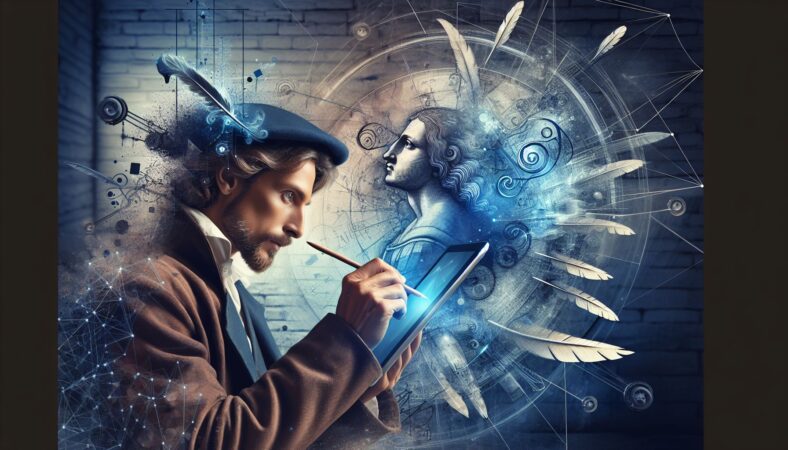
AI: The Da Vinci of the Digital Age

Hey there, fellow tech enthusiasts! Today, let’s dig into a mind-bending frontier that’s changing how we think about creativity: Artificial Intelligence in the creative arts. You heard me right. AI is not just limited to crunching numbers or playing chess anymore; it’s putting on the artist’s beret and dipping its virtual brush into the palette of human creativity. If you’re anything like me, you’ve been both skeptical and curious about the idea of machines generating art. Can silicon-based entities really capture the essence of creativity? Let’s find out!

The Rise of AI as Creator

From Neural Nets to Neo-Renaissance

You may have heard of OpenAI’s GPT or Google’s DeepDream. These aren’t just fancy names; they represent the cutting-edge of AI that can whip up a painting or even compose a symphony. It all started with neural networks, the algorithms powering these machines. They’ve evolved and adapted to learn the styles of Van Gogh, the storytelling techniques of Hemingway, and the musical genius of Beethoven. Are we in the midst of a new Renaissance, courtesy of AI? I’d like to think so.

The crazy thing about these technologies is their ability to learn quickly. Where it took centuries for humans to develop distinct artistic styles, AI can switch canvases in milliseconds, churning out works that range from baroque to futuristic in the blink of an eye. Imagine if Da Vinci had a supercomputer as an apprentice. Heck, Mona Lisa might’ve had a twin by now.

Breaking Down the Barriers

What gets me most excited is how AI is making art accessible to everyone. Not everyone can afford to spend years learning how to play guitar or master design principles. AI lowers the barrier to entry, giving everyone a fair shot at artistic expression. Apps like DeepArt and RunwayML are turning complex artistic processes into user-friendly interfaces while keeping the creative spark alive.

Imagine you’ve got a tune stuck in your head. Five years ago, I would’ve hummed it, maybe annoyed a friend with my off-key rendition. Now? You can hum it into an AI composer, which could return a fully orchestrated track, complete with a killer solo. Whether you’re a complete beginner or Picasso reincarnated, there’s no limit to what you can create when you’ve got AI on your team.

The Challenges of Machine-Made Art

Creativity vs. Originality

Now, let’s tackle the elephant in the room: authenticity. Can AI truly create, or is it just copying human creativity? The debate is as heated as any courtroom drama. Some say that AI is just remixing old patterns, while others argue that it’s opening up new possibilities we’ve never imagined.

Consider this: if you give AI some data from Pollock, it might splash a chaotic web of colors on canvas. But could it add the emotional depth Pollock did, inspired by his struggles and triumphs? Critics argue that while AI can generate, it can’t innovate. I think of AI more as a collaborator, a muse, rather than a rival.

Ethical and Legal Storms

Where there is art, controversy isn’t far behind. The ethics and legality of AI-generated works get messy fast: Who owns the pieces? The coder? The user? The AI itself? Sound like sci-fi? Welcome to the present, where copyright offices and legal teams are scrambling to create frameworks for a machine-made future.

We’ve heard stories about AI making headlines with artworks that sell for jaw-dropping prices at auctions, leaving artists wondering whether to celebrate or sue. As a creative myself, I empathize with traditional artists but also see the value in expanding our definition of artistry and ownership.

Dreaming of Tomorrow

Uncharted Territory

If thinking about AI painting or making music already gets your mind racing, think bigger. Fast forward a few years, and picture AI designing entire wardrobes based on the weather and your mood, or writing scripts for what could become the next blockbuster movie.

Picture this: AI collaborating with chefs to create culinary masterpieces or helping with virtual concerts that harmonize on a level never before heard. The fusion of AI and creativity opens avenues where art is not just consumed but experienced in an entirely new dimension.

The Synergy of Human and Machine

My favorite aspect of AI in the arts is its potential to push human creativity beyond what we thought possible. Artists are no longer solitary figures crafting alone under candlelight; they’re paired with a digital companion that’s not dictating terms but amplifying their vision. From real-time co-creation to expanding genres, the future of art lies in synergy, not competition.

Remember, these machines learn from us. The better we feed them, the richer and more authentic their output. They’re apprentices, ready to color outside the lines if we guide them. It’s up to us to channel their capabilities to strengthen human creativity, not replace it.

Final Thoughts

So there you have it, AI in the arts: both a challenge and an opportunity for creative souls of every shade. If you had asked me a decade ago if I’d be buying an AI-generated painting or listening to a robot-composed sonata, I would’ve laughed. Today? I’m here for the ride, and I hope you are too.

I like to think of this fusion of AI and art like discovering a new color. One that transforms and expands our canvas. The possibilities are endless, and innovation is the muse. What’s your take? Jump into the comments and let me know your thoughts!

Catch you in the next blog post, when we’ll explore the interstellar lanes. Who’s ready for space travel with AI copilots? Until then, keep dreaming and creating.

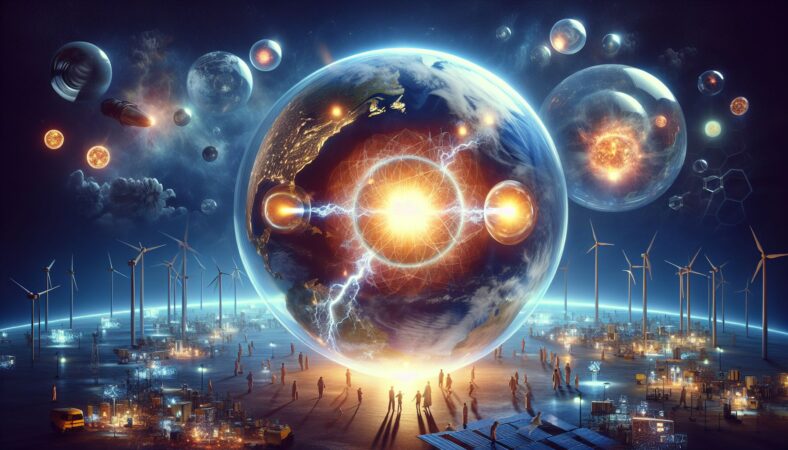
Nuclear Fusion: The Holy Grail of Energy Solutions

Greetings, fellow tech aficionados! Today, I’m excited to dig into a topic that’s as electrifying as it is fascinating—nuclear fusion. Now, before you roll your eyes and think, “Nuclear? Isn’t that the stuff of Godzilla movies?” hang tight. Nuclear fusion is less about monstrous reptiles and more about clean energy that could power every espresso machine in the world for millennia. You see, fusion is the Bono of the energy world—loved by many, controversial to some, but undeniably influential.

A Brief History: From Big Bang to Power Plant

Let’s jump into our DeLorean and take a short trip back in time. Nuclear fusion isn’t just a recent blip on the tech radar. Its origins date back billions of years, to a moment next to a cosmic flicker, aptly named the Big Bang. The very stars we wish upon every night are fusion reactors, churning out energy by merging hydrogen atoms to form helium.

Scientists have been eyeing fusion since the 1920s, dreaming of bottling the sun in a human-made reactor. This isn’t out of some Solar Superiority Complex, fusion promises to deliver almost limitless energy. In the lab, we’ve seen the sizzle, but we’re waiting for the steak.

How Fusion Works: Not Rocket Science… Well, Maybe a Little

Okay, let’s get a bit technical for a second without turning this into an episode of Bill Nye the Science Guy. Fusion involves heating up a mix of hydrogen isotopes, deuterium and tritium, to astoundingly high temperatures. At these sweltering levels, nuclei start to overcome their natural repulsion and smash together. It’s like a cosmic game of bumper cars.

When these nuclei fuse, they release energy, a heck of a lot of it. We’re talking about ten times more than conventional fission reactors and a barrel-load more than your standard coal plant. No greenhouse gases, no meltdowns, just good old energy with a fraction of the radioactive waste.

The Present: Where Are We Now?

So, where are we on this fusion rollercoaster? Imagine being on a road trip and every sign says, “10 miles to Nuclear Fusion!” Well, maybe that’s a stretch, but in December 2022, the U.S. Department of Energy announced a major milestone. They achieved net energy gain during fusion experiments, meaning, they produced more energy than they used to kick off the reaction. This feat took place at the National Ignition Facility in California, proving that fusion isn’t just some sci-fi fever dream.

However, converting these lab successes into power plant reality is no small fry. Enter companies like ITER and Helion Energy. These guys are like the Apple and Samsung of nuclear fusion, each trying to crack the code of a sustainable and economic fusion reactor.

The Challenges: Roadblocks and Speed Bumps

Now, before we all start singing “Age of Aquarius,” fusion’s path isn’t all rainbows and unicorns. First up, there’s the little issue of cost. Building a viable fusion reactor is like constructing the Taj Mahal, expensive and takes longer than expected.

Then there’s the whole confinement challenge. It’s tricky to maintain plasma as hot as the sun without melting everything around it. Imagine holding a lit sparkler inside a popsicle; the poor thing doesn’t stand a chance.

Tritium supply also poses a problem. As a rare isotope, its scarcity could rip a chunk out of the fusion future if we fail to come up with inventive solutions for its production.

Real-World Impact: A Game-Changer for Good

Alright, enough with the hurdles; let’s dream a little. Imagine a world without fossil fuels, where your electric car charges faster than you can watch a TikTok video. Fusion could be that future. It’s not just clean energy; it’s social equity, powering everything from tech hubs in Silicon Valley to rural villages in Africa without discrimination or scarcity.

With fusion, geopolitical energy tensions could become as outdated as rotary phones. Nuclear waste would be reduced almost to a non-issue compared to current fission reactors. And pollution? More like dilution. That was my dad joke quota, by the way; you’re welcome.

The Future: X-Men and Beyond

What’s next on the fusion timeline? Well, if the past few years have shown anything, it’s that we’re closer than ever before. Private companies, government labs, and even start-ups are throwing ‘fusion parties’ around the world, each competing for that Eureka moment.

If (and when) fusion becomes commercially viable, the Fourth Industrial Revolution will pale in comparison. Heck, even the Fifth. We can expect a seismic shift across every conceivable domain, from the tech industry to climate change policies, even impacting how we live on Mars (I see you, Elon Musk).

Conclusion: A Bright Horizon

To wrap up, nuclear fusion is an incredible blend of age-old wonder and cutting-edge tech. It’s the triumph of human ingenuity over cosmic-sized challenges. As a techno-optimist who spends more time reading about potential breakthroughs than is probably healthy, I believe we’ll see fusion power our world within my lifetime.

In the world of emerging technology, fusion is no mere buzzword, it’s a revolution in waiting. Until then, keep your eyes peeled for news from the world’s leading labs and companies. We’re on the cusp of something extraordinary, folks, and wouldn’t it be poetic justice if, after centuries of burning fossil fuels, our future was as bright as the stars themselves?

Catch ya later, dreamers and doers! Keep fusing those ideas.

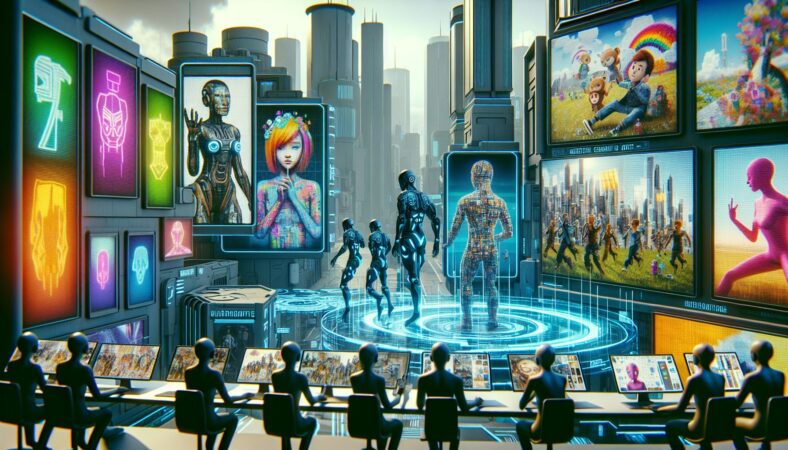
Are Deepfake Avatars the Future of Creative Arts?

Hey tech aficionados, sci-fi lovers, and futurists! Grab a cup of coffee or your preferred energy drink because today we’re diving deep into a crazy world where AI doesn’t just mimic human behavior—it turns creativity on its head. You guessed it: we’re talking about deepfake avatars in the creative arts. It’s like combining the magic of Hollywood with the precision of a Swiss watch. Sounds absurd? Maybe. But it’s happening, and I’m as excited as a coder getting their first Raspberry Pi.

The Magic of Deepfakes

Alright, let’s break it down. Deepfakes are those AI-generated pieces of wizardry that can copy real people’s looks, movements, and voices. They started out controversial because of fake news and shady intentions (remember those unsettling political videos?), but now the technology has shifted into something surprisingly positive: the arts.

Imagine recreating your favorite music video with you as the pop star, or better yet, performing a live duet with holographic Freddie Mercury. It’s like karaoke, but on steroids and without the terrible drunken screeching. The term “deepfake” has gotten a bad rap, but what about its career as an artist and entertainer?

A New Canvas for Content Creators

Draw a line here, folks. Deepfake avatars aren’t just a simple gimmick to show off tech prowess at cocktail parties. They’re opening doors for content creators in ways we hadn’t even thought possible a decade ago. We’re talking about democratizing creativity, giving budding filmmakers or artists an AI-powered set design and cast.

Take TikTok stars. They’re always experimenting with new ways to engage billions of viewers (talk about pressure). Enter deepfake avatars, where they can morph into any character or setting, giving each video infinite skins to try on like a gamer in a character customization screen.

How about budget filmmakers and indie storytelling? With these tools, you could literally cast any actor in history in your latest Sundance aspirational project. Want Buster Keaton as your silent film lead? You got it. Dreaming of Maya Angelou narrating your visionary short animation? Done.

The Ethical Mess

Of course, with a new playground comes its own set of rules, or lack thereof, and ethical problems. (Put those pitchforks away; we all saw this coming.) Who owns the rights to these digital likenesses? Is it really you if it’s your face but not your movements?

Sure, we don’t want AI-replicated Audrey Hepburn wearing Supreme hoodies in ads she never consented to. Think about it: with great power comes the need for some ironclad guidelines (thank you, Spider-Man’s uncle), and we’d be naïve not to address these digital landmines. Consent, privacy, and intellectual property just became frontline conversations on this new canvas of opportunity and exploitation.

Technology Still Has Work to Do

Deepfake tech isn’t a polished diamond just yet. We’re still figuring things out over here. It’s one thing to apply celebrity faces to various scenarios, but quite another to make every strand of hair and detail in one’s eyes photorealistic. No one wants a half-baked, glitchy-looking Gandalf wandering their Game of Thrones parody.

As more fine-tuned algorithms and better GPUs roll out, I expect big studios like Warner Bros or Netflix will start using this tech not just for trickery but to push artistic boundaries like never before. As technology moves through its creative adolescence, it’s exciting to think about what will be possible once it’s all grown up.

A Hypothetical Future

Enough about the now, let’s talk hypothetical futures of this deepfake arts revolution: performances that go beyond human capability. AI-driven avatars performing around the clock in immersive holographic concerts? Historical figures witnessing, even participating, in new cultural milestones? Once we get past today’s technological limitations, we could see an era where our creative reach knows no bounds, only imagination.

In a perfect world, we’ll blend authenticity with artifice, passion with pixels, and emotion with engineering to tell stories that resonate, educate, and entertain. Your avatar might just become your doppelgänger’s doppelgänger, taking our artistic experiences into the fourth dimension, quite literally painting with light and sound.

Conclusion

So, friends, the canvas is ready, the paint is being mixed, and the brushes are in your hands. Are you ready to engage in a creative revolution? Because deepfake avatars are inviting artists, storytellers, and dreamers to explore new territory. Whether you’re a tech optimist or a cautiously curious bystander, there’s no denying that we’re looking at something that challenges what creativity means in the modern era. Get ready to create your own version of reality, one deepfake at a time.

As always, go forth and innovate.

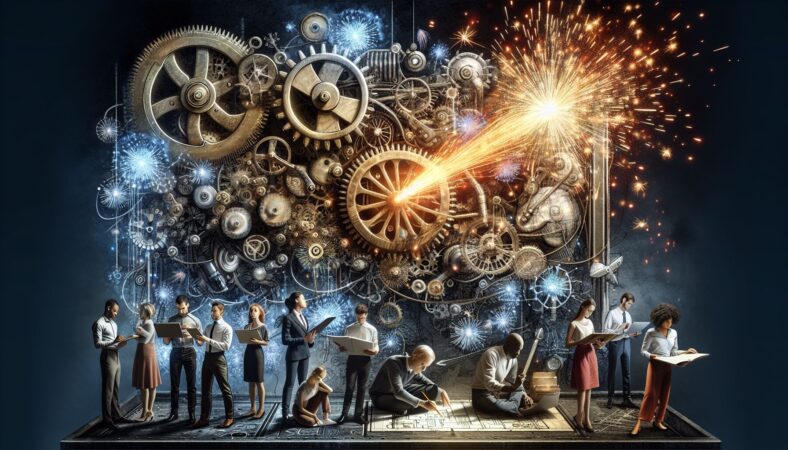
AI-Creative Boom: When Machines Dream, and We Dare to Follow

Hey tech enthusiasts! Today, I want to talk about a topic that’s sending ripples through the creative community and beyond: the rise of AI in the creative arts. As someone who’s always had a soft spot for both tech and a good piece of art, I’m buzzing with excitement to see what happens when we mix the two. If you’re like me—stuck between the passion to paint and the urge to code—you’re going to love this. So grab your latte, sit back, and let’s decode this brave new world where machines meet Michelangelo.

The Creative Code: How AI is Painting (and Playing) a New Reality

Let’s start with what’s happening right now. We’re not just talking about AI churning out repetitive pop songs or slapping together Van Gogh-style prints. Nah, we’re past that. AI is jumping headfirst into nearly every corner of the creative world—from composing symphonies that could bring tears to an android’s eye to writing novels that might make I, Robot a reality.

[In]Credible AI Musicians

Picture this: AI-driven music programs are learning from the greatest composers of all time, and they’re not just remixing Beethoven for the umpteenth time. Programs like OpenAI’s MuseNet can generate brand new compositions in all sorts of genres. I mean, who’d have thought that machines might soon challenge Beethoven for a spot on our most-played list? Personally, I’m looking forward to the best 9-part synth-bass-funk-fusion-opera powered by AI. And why not? Maybe one day, we’ll be raving about the AI origins of the Grammy-winning soundtrack of the year.

Literary AI: From Idea to Best Seller?

In other realms, we have AI messing around with storytelling. We’re seeing AI pen short stories, poetry, even screenplays. There’s this one project I’ve been following, first developed over at OpenAI, called GPT-3, that can whip out a fairly decent narrative from a single prompt. I put it to the test myself once, asking it to write a sci-fi short inspired by my morning run. The end result still had a few hiccups—repetitive phrases and whatnot—but it was eerily readable nonetheless. Who knows? In the near future, your favorite bestseller might be co-authored by a machine.

The Creative Process Rebooted: AI as the Artist’s Muse

While there’s buzz about AI replacing artists, I believe it’s less about replacement and more about collaboration. Think of AI not as the painter, but as the palette.

AI as a Collaborative Medium

Let’s consider the famous artist-refuge, Adobe, which announced a suite of AI integrations called Adobe Sensei, aimed at aiding creators in anything from automated photo edits to suggesting design elements. The difference here is that it isn’t doing the creating for the artist but rather boosting human creativity, shaking off the mundane and time-consuming tasks that can kill the creative flow.

Do you remember that feeling the first time Photoshop layers clicked or you first experienced Canva? Yeah, that game-changer moment. Artists today, using AI, are experiencing something similar. And honestly, it’s infectious. Graphic designers are getting suggestions on color schemes, musicians are tweaking AI-generated melodies, and writers are getting over their infamous blocks. The creative process itself is being reborn through this tech upgrade.

Challenges: Creativity in the Face of Code

Now, pumping the brakes here—we can’t just go all-in without stopping to reflect on some very real concerns. There are ethical questions lingering around this tech-paved artistic path.

Rights and Authorship

Alright, confession time. I tried inserting AI-generated content into my own creations. Felt a bit like cheating. I mean, who gets credit for the AI co-authored sonnet? The coder? The user? The machine? And copyright! Lordy, that’s another beast entirely. The legal world is still wrestling with these questions, and frankly, it’s like trying to unknot Christmas lights that have been in the attic since the 90s.

The Soul of Art

Another philosophical question bats around like a particularly resilient fly: Can machines truly capture the human condition? Because let’s face it, while AI can analyze thousands of works, it can’t feel the sunset the way we do. Yet, what’s emerging from this mix is something uniquely new. Perhaps AI will mirror our emotions in ways we’ve yet to understand.

Future Gazing: Is Art Unleashed?

So, where do we end up in this maze?

The Augmented Creator’s Toolkit

In my utopian crystal ball, I see AI not overpowering human creativity but supercharging it. We’ll either see AI-powered art explode into a wild new genre or settle down into a toolkit standard for every artist. Imagine a world where every creative has personalized AI assistance, fine-tuned to their personal quirks and creative flair. That’s not a soul farm; that’s freaking exciting!

New Art Forms on the Horizon

Moreover, as AI matures, it’ll likely create completely new genres of art, novel experiences that blend virtual reality with neural networks, creating things we can’t even start to imagine. And wouldn’t it be cool if instead of tuning into an evening art class, you tuned into your personalized AI design jam session? Where everyone gets to grab a digital brush and create with the machine.

Wrapping It Up

Alright folks, I’m calling it a day on this whirlwind ride. Whether you’re on the side of glee or skepticism, it’s pretty clear that AI’s role in the creative arts is one heck of a ride worth seeing through. So, while I contemplate whether my next piece of digital art needs an AI touch or just an extra espresso, I’d love to hear your musings on where you think AI is taking us. Creative partnership, dystopian art factory, or somewhere in between? Hit me up with your thoughts. Until next time—keep dreaming, keep creating, and perhaps, let a little tech into your art!