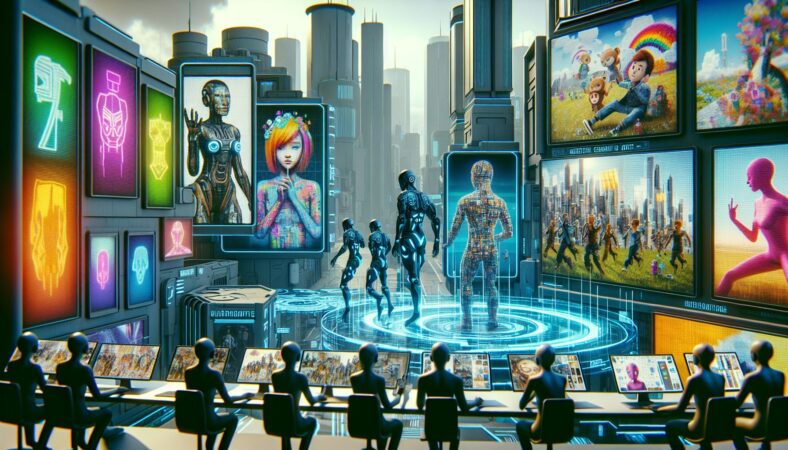
Hey tech aficionados, sci-fi lovers, and futurists! Grab a cup of coffee or your preferred energy drink because today we’re diving deep into a crazy world where AI doesn’t just mimic human behavior—it turns creativity on its head. You guessed it: we’re talking about deepfake avatars in the creative arts. It’s like combining the magic of Hollywood with the precision of a Swiss watch. Sounds absurd? Maybe. But it’s happening, and I’m as excited as a coder getting their first Raspberry Pi.
The Magic of Deepfakes
Alright, let’s break it down. Deepfakes are those AI-generated pieces of wizardry that can copy real people’s looks, movements, and voices. They started out controversial because of fake news and shady intentions (remember those unsettling political videos?), but now the technology has shifted into something surprisingly positive: the arts.
Imagine recreating your favorite music video with you as the pop star, or better yet, performing a live duet with holographic Freddie Mercury. It’s like karaoke, but on steroids and without the terrible drunken screeching. The term “deepfake” has gotten a bad rap, but what about its career as an artist and entertainer?
A New Canvas for Content Creators
Draw a line here, folks. Deepfake avatars aren’t just a simple gimmick to show off tech prowess at cocktail parties. They’re opening doors for content creators in ways we hadn’t even thought possible a decade ago. We’re talking about democratizing creativity, giving budding filmmakers or artists an AI-powered set design and cast.
Take TikTok stars. They’re always experimenting with new ways to engage billions of viewers (talk about pressure). Enter deepfake avatars, where they can morph into any character or setting, giving each video infinite skins to try on like a gamer in a character customization screen.
How about budget filmmakers and indie storytelling? With these tools, you could literally cast any actor in history in your latest Sundance aspirational project. Want Buster Keaton as your silent film lead? You got it. Dreaming of Maya Angelou narrating your visionary short animation? Done.
The Ethical Mess
Of course, with a new playground comes its own set of rules, or lack thereof, and ethical problems. (Put those pitchforks away; we all saw this coming.) Who owns the rights to these digital likenesses? Is it really you if it’s your face but not your movements?
Sure, we don’t want AI-replicated Audrey Hepburn wearing Supreme hoodies in ads she never consented to. Think about it: with great power comes the need for some ironclad guidelines (thank you, Spider-Man’s uncle), and we’d be naïve not to address these digital landmines. Consent, privacy, and intellectual property just became frontline conversations on this new canvas of opportunity and exploitation.
Technology Still Has Work to Do
Deepfake tech isn’t a polished diamond just yet. We’re still figuring things out over here. It’s one thing to apply celebrity faces to various scenarios, but quite another to make every strand of hair and detail in one’s eyes photorealistic. No one wants a half-baked, glitchy-looking Gandalf wandering their Game of Thrones parody.
As more fine-tuned algorithms and better GPUs roll out, I expect big studios like Warner Bros or Netflix will start using this tech not just for trickery but to push artistic boundaries like never before. As technology moves through its creative adolescence, it’s exciting to think about what will be possible once it’s all grown up.
A Hypothetical Future
Enough about the now, let’s talk hypothetical futures of this deepfake arts revolution: performances that go beyond human capability. AI-driven avatars performing around the clock in immersive holographic concerts? Historical figures witnessing, even participating, in new cultural milestones? Once we get past today’s technological limitations, we could see an era where our creative reach knows no bounds, only imagination.
In a perfect world, we’ll blend authenticity with artifice, passion with pixels, and emotion with engineering to tell stories that resonate, educate, and entertain. Your avatar might just become your doppelgänger’s doppelgänger, taking our artistic experiences into the fourth dimension, quite literally painting with light and sound.
Conclusion
So, friends, the canvas is ready, the paint is being mixed, and the brushes are in your hands. Are you ready to engage in a creative revolution? Because deepfake avatars are inviting artists, storytellers, and dreamers to explore new territory. Whether you’re a tech optimist or a cautiously curious bystander, there’s no denying that we’re looking at something that challenges what creativity means in the modern era. Get ready to create your own version of reality, one deepfake at a time.
As always, go forth and innovate.